

A Tribute to Alice Wong and Leslie Lee III; Keep Masks in Healthcare Settings with Alice Wong; When Things Fall Apart with Kelly Hayes
A tribute to Alice and Leslie, and "Read This When Things Fall Apart"...this week on Death Panel (11/17-11/23)

Over the past year, a lot of you have asked for more windows into the work I do on Death Panel—something a little more reflective than the episode descriptions, that traces the ideas, people, and political commitments that shape the show each week. So in that vein, I’m trying something new. Each week, I’m going to write a short companion piece that gathers the episodes, offers context, and gives you a sense of what’s moving underneath the surface: the emotional terrain, the inspiration, the core analysis, the threads that tie the conversations together. Think of it as a space where the show and my writing meet—a place to slow down, document the work I do, and build a record of the broader struggle we’re part of. My hope is that it deepens the connection between the show and this newsletter, and also gives you another way to engage with the ideas and communities that sustain us. As we approach the incredible milestone of 600 episodes, I figured it’s about time I finally got around to this :)
Before we get into each episode, we also want to share something new we’re trying out which has also been a much requested ask from Death Panel listeners. We’re testing out a new Bookshop.org page (still under construction), where you can find books by past guests and book recommendations from the hosts. Find it here: bookshop.org/shop/deathpanel. We hope it becomes another small (and more accessible/effortless) way to circulate the work of people who sharpen our thinking and analysis on Death Panel.
So here we go…
Some weeks reshape the ground under our feet. This is one of those weeks, and the two episodes we released reflect that: one born entirely of collective grief and love, the other a return to the tools and wisdom that keep us alive in struggle. This week we released two episodes:
Monday’s patron episode, A Tribute to Alice and Leslie, which has an extended introduction honoring the lives of our friends and comrades Alice Wong and Leslie Lee III, who both passed away last week. And Thursday’s main feed episode, our interview with Kelly Hayes about her new edited collection, Read This When Things Fall Apart: Letters to Activists in Crisis. Taken together, these episodes chart a landscape of grief, connection, care, and political clarity in a moment that continues to demand more of us. Below, you’ll find reflections on each.
A Tribute to Alice and Leslie (Patron episode, 11/17/25)
Listen to a longer version with Alice’s last DP appearance: www.patreon.com/posts/143713819
Leslie’s GoFundMe: www.gofundme.com/f/lleeiii
Alice’s GoFundMe: www.gofundme.com/f/alice-wong-stay-in-community
This week began with a rupture. We lost two people whose brilliance fundamentally shaped Death Panel and the broader disability and left media ecosystems: Alice Wong and Leslie Lee III. Their deaths were within days of each other, truly a devastating week. And in the face of that grief, we knew we couldn’t just carry on with our scheduled programming. Monday’s episode is a deliberate pause, an invitation to sit with the enormity of these losses and honor the futures they fought for and made possible.
The episode traces their legacies—singular, irreplaceable lives that changed our political and emotional landscapes. But it is also an insistence that grief is political. That mourning is not separate from struggle. That the best way to honor Alice and Leslie is not through reverence alone but through carrying forward the commitments they sharpened in us: clarity as care, generosity as discipline, solidarity as futurity.
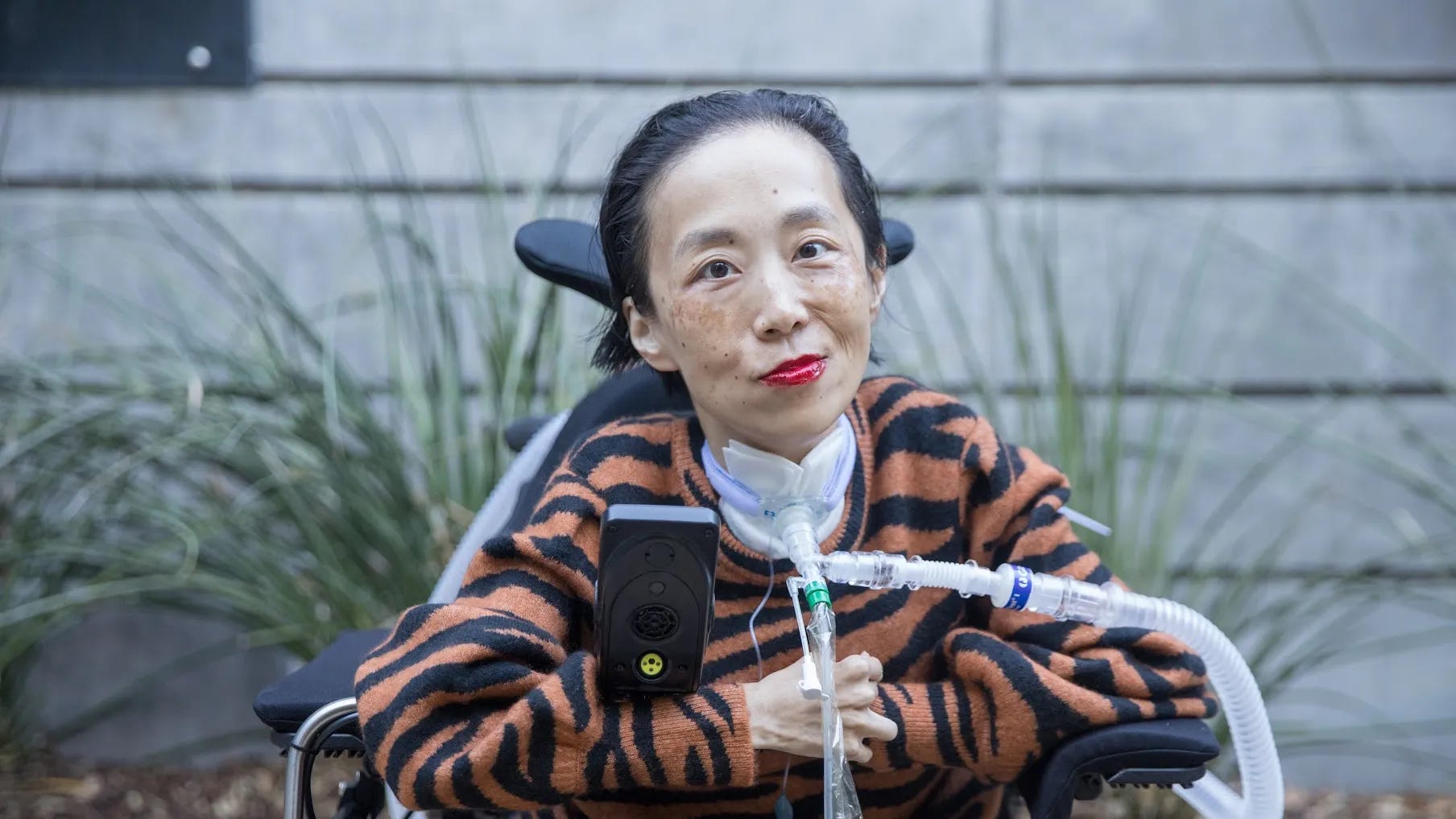
Alice had a way of bringing people into orbit with one another, stitching together disabled writers, organizers, artists, scholars, and survivors who might have otherwise remained strangers. She built community the way some people tend gardens: noticing what needed care, what needed space, what needed light.
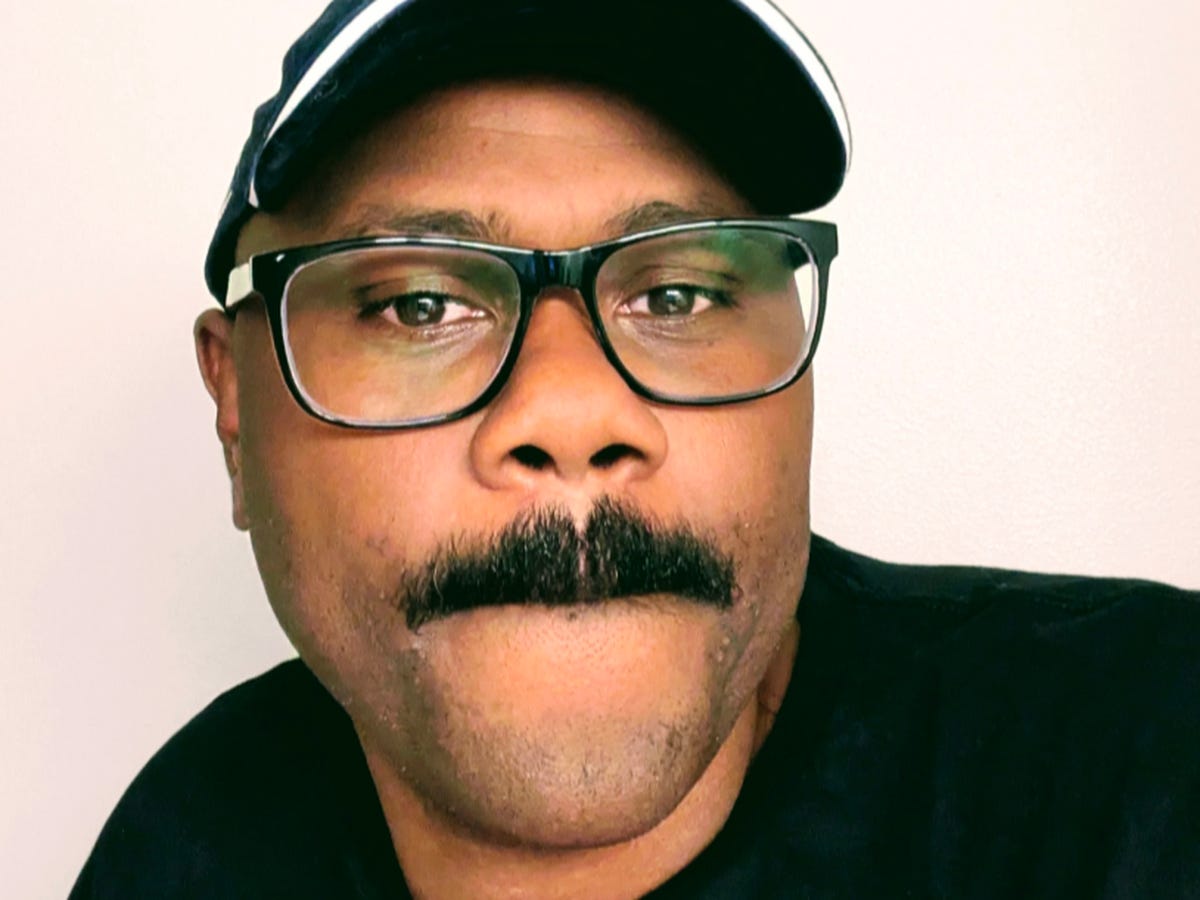
Leslie had this grounding presence: sharp, wry, generous, kind, and allergic to bullshit. Even after Long Covid forced a brutal reconfiguration of his life, he kept on teaching us, telling the truth about the violence disabled and chronically ill people live with because he understood how dangerous silence becomes in moments of mass abandonment.
We close the episode with Alice’s last appearance on Death Panel, talking about masking in healthcare settings—her reminder that rage, fear, despair, and exhaustion are not failures but truths to be held collectively. Her words guide the closing: We will not be erased no matter how hard these bastards try.
If you’d like to learn more about Alice and Leslie, here are some tributes that are a great starting point—
Alice’s Disability Visibility Project
Alice Wong was Crips for eSims for Gaza, and Everything to Us by Jane Shi and Leah Lakshmi Piepzna-Samarasinha
Alice’s GoFundMe: www.gofundme.com/f/alice-wong-stay-in-community
Leslie’s podcast: Struggle Session
Leslie Lee III: Funeral for a Friend by Adam Umak
Leslie’s GoFundMe: www.gofundme.com/f/lleeiii
I’ve included the text of my opening monologue from this episode at the end of the post.
When Things Fall Apart w/ Kelly Hayes (Unlocked, Main feed episode 11/20/25)
Thursday’s episode is a return to a different kind of care practice—the kind that helps us survive struggle without numbing ourselves to its stakes. Originally a patron episode from October, we unlocked our conversation with Kelly Hayes about her newly published edited collection Read This When Things Fall Apart: Letters to Activists in Crisis. The timing feels uncanny: a book about making it through overwhelm, despair, and exhaustion arriving in the same week we are grieving enormous loss.
Kelly joined us to talk about what it means to hold each other together during times of rising/compounding fascism, particularly against the backdrop of the Trump administration’s attempted occupation of Chicago. The book is an offering to people organizing through crisis after crisis, who need more than platitudes or moralizing. The letters themselves—by contributors like Mariame Kaba, Leah Lakshmi Piepzna-Samarasinha, Jane Shi, Stevie Wilson, Eman Abdelhadi, Micah Herskind, and many others—are intimate and model what it looks like to be accountable to each other. They refuse the lie that the only way to survive is to harden. Instead, they make vulnerability a site of strategy. Reminding readers that struggle is something to be done with others, not in spite of them.
Kelly and I talk about the book as a kind of care package—something you keep close, something you return to at 2am when the world feels unbearable. The letters speak across walls, across prison sentences, across burnout, across the disorientation of campaigns that fall apart. They remind us how to stay tethered to each other when the world is actively trying to unravel those ties.
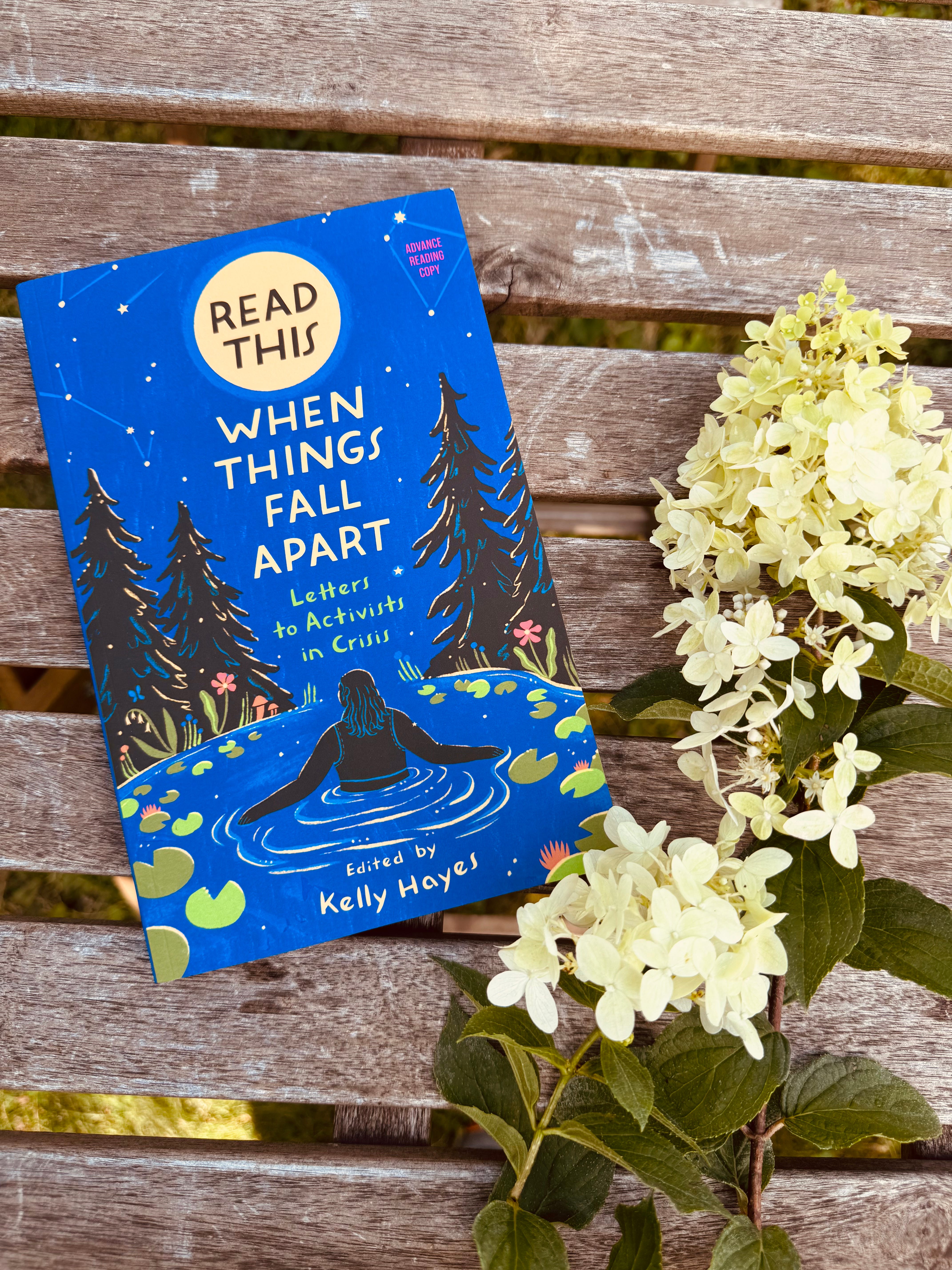
There’s a particular moment we highlight from Stevie Wilson’s letter, “Read This if You Are a Discouraged Incarcerated Organizer,” where he writes: “I hope these words lift and strengthen your spirit… I hope they encourage you to be a menace to our enemies. Because we need you. We need each other. Together is the only way we will win.”
That line encapsulates the entire ethos of the collection: not hope in the sentimental sense but hope as a shared practice of keeping each other alive and dangerous to power.
Our conversation moves between the book’s political grounding, the logistics of holding communities through crisis, and the emotional weight of organizing in a moment when everything feels frayed. Kelly talks about what it means to write and edit during collapse, and what it means to build tools for the future even when the present feels apocalyptic.
This episode pairs uncannily with Monday’s tribute—not because their content overlaps per se, but because both episodes wrestle with the question of how we keep going. How we metabolize grief. How we stay human in the face of dehumanizing systems. How we build the infrastructures—political and emotional—that keep movements alive.
If Monday’s episode was a space of mourning, Thursday’s is a space of recommitment. Both insist that our survival is collective.
xBeatrice
Finally, here is the text of my tribute to Alice and Leslie if you’d like to read along while listening.
Listen to a longer version with Alice’s last DP appearance: www.patreon.com/posts/143713819
There are weeks when the world feels like it spins off its axis a little. When grief piles on grief, and the losses don’t feel sequential so much as simultaneous—like one blow that lands twice, three times, four times, again and again. This is one of those weeks.
Losing Leslie Lee III and Alice Wong within days of each other feels like a rupture, a tearing in the fabric of the disability community. These are two people who shaped the way so many of us think, feel, create, fight, and dream. People we were lucky enough to collaborate with here at Death Panel, to joke with, to learn with, and to learn from. People who each, in their own way, refused to separate political clarity from tenderness, or imagination and creativity from principled struggle.
Their work traveled across continents, timelines, and generations—quietly at times, thunderously at others—leaving behind a depth of influence that will outlast all of us. Losing them together feels like losing two constellations that have accompanied us for years.
A lot of you have been reaching out, saying you feel gutted, lost, scared, sad. I feel all of that too. We feel all of that too. It’s a sharp heaviness—at once—personal, political, and collective grief. So we felt it necessary to interrupt our regular programming to talk about it, and to spend some time honoring and remembering our comrades Leslie and Alice. We not only want to name the grief, but we want to honor the worlds that Leslie and Alice built, their brilliance, the lessons they left us, and the kind of futurity their work insists that we claim. A futurity that they never treated as abstract—but as something we build together day after day, in relationships, refusals, and creative, joyful, rageful persistence.
I want to start by talking about our dear Alice.
Alice Wong altered the landscape of disability politics. It is impossible to overstate the way that she has changed all our thinking. Not metaphorically—literally. You can feel her imprint and influence everywhere. In every disabled writer who came up because she opened a door. In every organizer who learned that access is not just a checklist, but something constructed through struggle, collaboration, principled refusal, and joy. In every person who realized, because of her, that being disabled is not a deficit, but a vantage point—an embodied knowledge—a position from which we see and know the violence of the world so clearly but also from which we are uniquely positioned to imagine and actively enact the futures we deserve.
And beyond her public work, there was the quiet, everyday Alice—the one who sent notes of encouragement at exactly the right moment; who uplifted younger, emerging disabled thinkers without ever positioning herself as gatekeeper or paternalistic mentor, because she saw us all as co-conspirators; who insisted that interdependence was not a metaphor but a practice. There are countless disabled people who never met her but nonetheless found their voice because of her, people who recognized themselves for the first time in the worlds she insisted on building.
Alice was one in a million. She had incredible influence, and Alice didn’t hoard influence. She redistributed it. Constantly. That was a great skill she had. That was a core part of her practice. She built the Disability Visibility Project not as a platform for herself, but as an ecosystem—an intergenerational network of disabled thinkers (oracles as she liked to say), storytellers, organizers, and dreamers. And she did that with a level of political discipline that never wavered. She called out eugenics, austerity, medical abandonment, and state austerity with precision, but always from a posture of possibility. Her critique was never nihilistic—it was a map. A map toward the world that she always insisted (and knew) was already emerging in the cracks. In the rotten husk of the old world crumbling around us.
Alice moved with an intentional generosity that made people bolder. She made disabled life legible for so many, and refused to sand down its edges. She made the invisible labor of disabled life—not only visible—but beautiful.
And even as she became more widely recognized—a MacArthur Fellow, a world wide media figure, truly a cultural force—she never forgot her core ethic: that visibility without redistribution is meaningless. That platforms are worthless unless they uplift others. That philanthropy is compromised unless it is seized as a wedge for systemic change. That activism isn’t supposed to be comfortable, or palatable, or convenient.
She lived that. She lived it while collaborating with us. While fighting the medical industrial complex. She lived in the clarity of her politics in solidarity with Palestinian liberation where she said, plainly, that disabled liberation is inseparable from the liberation of all oppressed peoples. She lived it in her refusal to be apolitical in a world that often demands that disabled people stay silent, grateful, and compliant.
Alice’s legacy is not just a body of work, it’s a vast web of relationships. It’s a lineage of people she made feel seen, capable, brave, imaginative. And that lineage will continue long after any of us are gone.
Even now—as we sit with the weight of losing her—there is a kind of radiance in recognizing just how much she shaped us. The personal and political transformations she sparked are not going anywhere. They live in our habits, our commitments, our imaginations. Her life was a lesson in how to move through the world with integrity and fire. And like all great teachers, her influence outlives her in ways we are only beginning to understand.
Now I want to talk about Leslie.
Leslie Lee III was unlike anyone I’ve ever met. He was so sharp, politically incisive, historically grounded, unafraid of saying exactly what needed to be said and he did it with a humor that disarmed people and brought them along. He could see the rot at the heart of complex systems, but he never lost sight of the people fighting for their lives inside those bloody, cruel, gears of empire. That’s rare. That was Leslie’s greatest gift.
And Leslie didn’t just critique—he curated possibility. Through Struggle Session, through his writing, through every conversation, he created intellectual environments where people could tell the truth without hedging. Where ordinary people felt invited to think rigorously, critically, generously. He had that rare talent of making theory breathable. Of making revolution feel like something you could reach out and touch. Of refusing despair not because things weren’t bleak but because despair was a weapon of the ruling class and he would never grant them that victory.
The first time he came on the show in 2018 he told me that he appreciated that I said something on air like, “If you don’t support Medicare for All (with comprehensive home based long term care) you want disabled and poor people to die.” And he told me how compelling it felt to hear someone say it that plainly. He loved clarity. He loved when people named the violence without flinching. Maybe because he knew—instinctively—that clarity is an act of care. When you tell the truth without apology, you’re offering people a way out of confusion, shame, and bargaining with the fall between the cracks. You’re giving them a political foothold on the path that leads toward liberation.
One of my favorite memories is talking to him about the 2019 Joker movie when he was writing that TruthDig piece on how neoliberalism is the true villain of that movie. I joked that the film felt like the I Spit on Your Grave of medicalization—a revenge flick for people pulverized by a system that erases them as it consumes them and denies them all that they need to live. He loved that. We talked and talked about how rare it is to see the brutality of healthcare depicted honestly in pop culture, even if stylized. And later, when Leslie got sick himself—when Long Covid reshaped his life—he understood even more intimately what it meant to be forced into the surplus class. To have your body turned into a site of profit, extraction, and abandonment. But he didn’t shrink from it. He turned that experience into testimony. Into analysis. Into solidarity.
And what strikes me most now, looking back, is how even in immense pain and exhaustion, Leslie’s instinct was to keep teaching. To keep naming what the state refused to name. To keep insisting that the truth mattered—not for its own sake, but for the lives tethered to it. He wasn’t a romantic about struggle, but he believed in it with a seriousness that made other people braver.
I remember him joking on his first Death Panel episode, “This is Death Panel, right? So now that we’re at the end of the episode, do I get to pick who dies? That’s how this works, right?” That was Leslie—dark humor as political pedagogy.
Leslie’s generosity, compassion, and humor made every conversation a lesson in care, curiosity and courage. He made space for others’ brilliance while sharing his own so freely. Leslie’s voice shaped the debates we all needed to have; his no bullshit vision of justice and creativity will continue to guide those of us lucky enough to have learned from him. I already feel the weight of his absence—not just personal, but intellectual and political. I am truly grateful for having known him. I will carry his brilliance, laughter, and commitment with me always.
What happened to him—what Long Covid did to him—is part of a larger story. An epidemic of abandonment. A state that decided millions of people are disposable. He documented that with a clarity that should have shaken everyone that encountered it to their core. It is devastating that he won’t be here to keep telling that story. And it is devastating that he became part of the story because of the state’s violence.
Both Alice and Leslie were irreplaceable. Their loss isn’t a void that we can “fill.”. There’s no substitution. No seamless continuity. Their absence is real. Ongoing. A wound that doesn’t close, a fault line that we can’t fix, that reshapes the terrain we stand on. Their deaths reorder the emotional and political landscape of our community.
And in disability communities, especially, these losses accumulate differently. They’re not spaced evenly throughout a lifetime. They bring waves of grief that crash into each other. Because as Leslie and Alice always reminded us, disabled life under capitalism is precarious by design. Because eugenic violence is not historical—it’s ongoing. Because our people die younger, sicker, and more isolated than they ever should.
Because the state and often other people treat our lives as expendable and our early deaths as inevitable. And when we lose people like Leslie and Alice, and earlier this year the legendary Patty Berne of Sins Invalid, another giant of disability justice, it lands with a violence that is both intimate and structural.
And yet: disability communities are all about making life possible in the cracks. Making it worth living. We have always built immense worlds out of what the state starves. We have always turned grief into political commitment and resolve. We have always found each other in the rubble and insisted on making something gorgeous, unruly, and revolutionary out of the ruins. That’s part of what hurts so much right now—because they were two of the many people who taught us how to do that. They were always there to remind us what care actually requires, what solidarity can feel like when it’s real.
Losing people we love—people who shaped our thinking, our work, our movements, our tase—is its own kind of instruction. It teaches us what they cultivated. What they left behind. What they believed we were capable of. It forces us to name the stakes clearly: that our grief is inseparable from our politics, that our mourning is a form of analysis, that remembering them is also a demand to keep building the world they insisted was possible. Their deaths become part of our political education—not in a romantic sense, but in the way that reality forces us to grow teeth.
I don’t want to talk about filling shoes. That’s not what this is. That is not possible. Alice and Leslie were singular. But the things they built were also never about individual legacy. They were about collective capacity. Collective survival. Collective joy. And collective struggle. They were about what becomes possible when we refuse to gatekeep each other’s brilliance, or delude ourselves into thinking that struggle is a solitary endeavor. They showed us again and again that the point is not to become palatable to our enemies—it’s to echo the words of June Jordan, to become a menace to our enemies, to become more dangerous to power, together.
Their memory, if it is to mean anything to us, has to be about futurity. Not the vague idea of an abstract impact on “future generations.” No, the immediate, material futures we shape together. The futures we owe each other. The futures we owe Leslie. The futures we owe Alice. The futures that demand more of us—more courage, more clarity, more imagination, because the stakes are so high. To meet this moment with the same urgency they carried, the same refusal to bargain with systems intent on killing us.
Alice taught us that disabled futures are already here, in every act of mutual aid, in every voice lifted, in every refusal to let the bastards grind you down. Leslie taught us that naming power plainly is the highest form of care—that political honesty is love. Together they showed us that liberation is not theoretical; it’s lived, shared, and insisted upon even when the world makes it feel impossible.
So what do we do with that? What do we do now, in the thick of this collective grief?
We remember that despair is not the place that Leslie and Alice would want us to live, that we need to move through our grief and fear and despair together. We honor them by refusing isolation, refusing to go quiet, refusing to let the violence of our day to day lives become another excuse for the state to dictate the limits of our future for us.
We carry forward the things they sharpened in us: the commitments, the analysis, the sense of humor, the refusal to lie about what the world is, and the refusal to compromise, to lie about what we deserve in this life. We carry the ways of moving through the world that they modeled—Alice’s rigorous generosity, Leslie’s fierce clarity. We carry the lessons they gave us about what it means to be part of a movement that is both fragile and unstoppable.
We build worlds that Leslie and Alice would recognize, that they would celebrate. Worlds that honor their clarity, their tenderness, their righteous rage, and their courage. Worlds that deepen their unfinished work. Worlds that refuse to let their brilliance dissipate into memory alone.
And we take responsibility for moving forward. Not to “replace” them, but to continue the work they were already doing with us. To treat their memory not as an inheritance to guard, but as a living evolving practice to enact. A responsibility we step into daily. A commitment not to replicate them, but to let their influence continue to change what we believe is possible.
Alice Wong showed us how to build fierce and beautiful community that outlives any one person. Leslie Lee III showed us how to make political courage contagious, and to never, ever relent. Together, they showed us how to live a politics that is uncompromising, loving, and profoundly collective.
Their lives changed us. Their deaths change us too—but not into something smaller. Into something more committed. More attuned to each other. More unwilling to settle for the narrow, the timid, or what the powerful say is all that is possible.
So to Leslie, and to Alice——thank you.
Thank you for the worlds you built for us, the fights you sharpened us for, the joy you shared with us, the clarity you modeled for us. Thank you for trusting us with your work. Thank you for being a part of our lives. Thank you for believing that disabled life is worth defending fiercely and celebrating loudly. Thank you for refusing silence.
We will miss you—deeply, painfully, endlessly.
ANd we will carry you forward in ways that matter.
Rest in power, both of you. We will continue the struggle—not in your absence, but in your company.
We’re going to leave you today with Alice’s last appearance on the show, a discussion she and I had just last year about the need to keep masks in healthcare settings.
And, as Alice says at the end of this interview:
“You are not alone but ableism, like white supremacy, is designed to pit us against each other to fight for the crumbs. We can build power, collaborate, and stir shit up because our cause is righteous and true. It is exhausting just to exist let alone defend our humanity every day. Honestly, I think what I went through last week brought me right to the breaking point. I have never felt so beaten down and defeated. It’s important to admit those dark scary thoughts and not gloss things over just to move on or put on a brave face. Lean into your rage, despair, and fear. Being honest with ourselves and others strips away the need to constantly perform and advocate. Remind yourself it never had to be this way and that all of us can resist in big and small ways. You are a goddamn oracle and your wisdom is a light that can show us the way forward. And we will not be erased no matter how hard these bastards try”
Absolutely love this new peak into your process 🖤
This helped. Thank you.